Axonis Therapeutics

AXONIS Therapeutics is an early-stage biotechnology company advancing central nervous system (CNS) therapeutics that enable neurons to resist degeneration and regenerate. AXONIS’ pipeline consists of several early stage first-in-class neuron-reviving assets.

AXONIS team was seeking to add clarity when communicating with investors about their unique approach to spinal cord injury therapy. Spinal cord injury is not an easy disease to tackle, and neuron regeneration field didn’t see many successful ideas in the past.  

We worked closely with the CEO to thoroughly understand existing challenges with investors and took time to get to the bottom of the science that makes AXONIS’ approach different. We developed a new corporate story, messages, and content for the investor deck. Designed new mechanism of action illustrations to help the client explain the value of their scientific approach. And created a new logo and branding for this promising new startup.

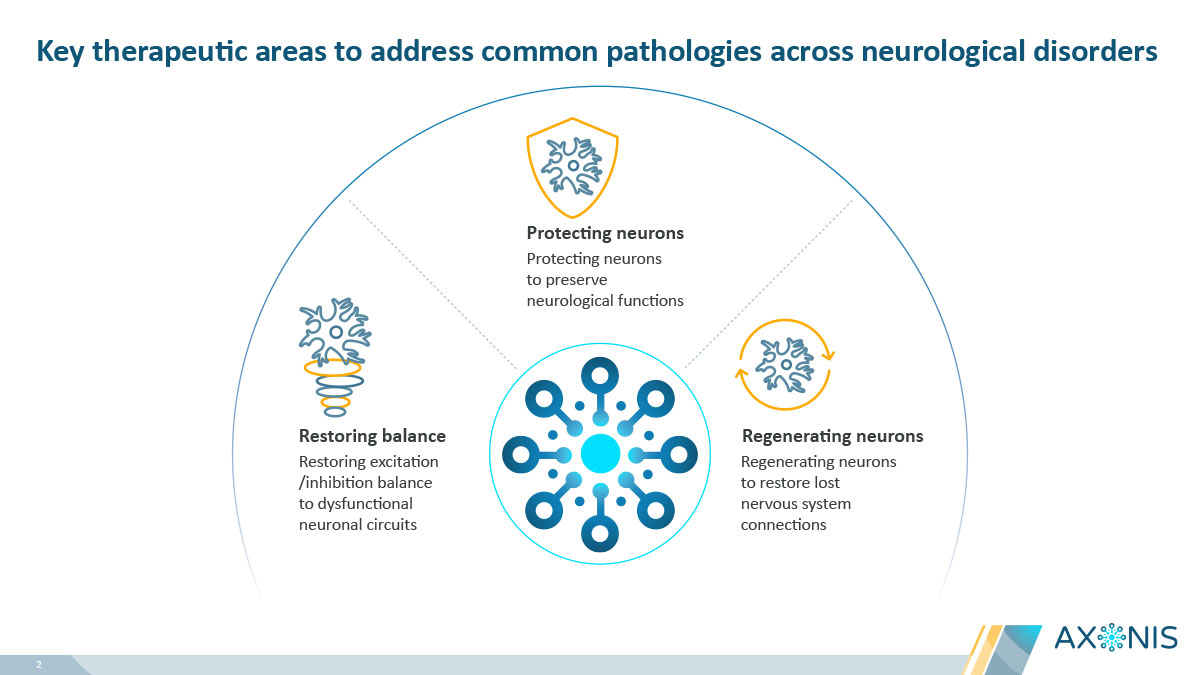
This slide from Axonis outlines their key therapeutic areas to address common pathologies across neurological disorders. These include 'Protecting neurons' to preserve neurological functions, 'Restoring balance' of excitation/inhibition in dysfunctional neuronal circuits, and 'Regenerating neurons' to restore lost nervous system connections. A central graphic with interconnected nodes visually represents their approach to CNS therapeutics.
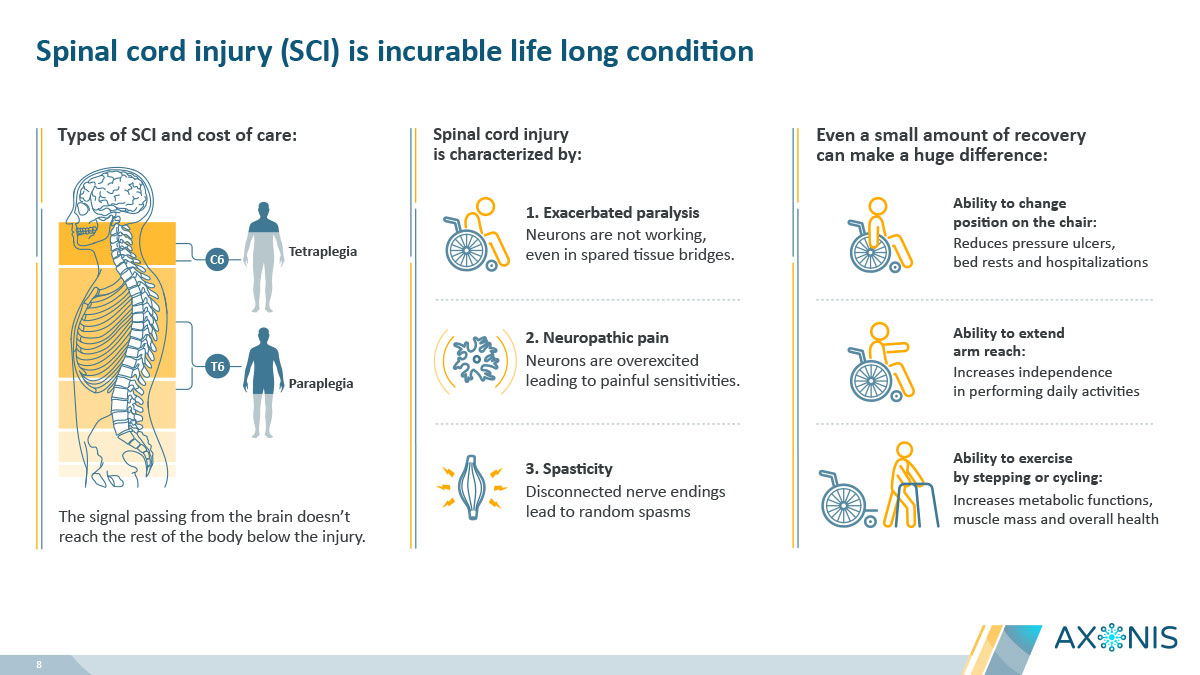
This slide provides an overview of Spinal Cord Injury (SCI) as an incurable, lifelong condition. It illustrates types of SCI (tetraplegia and paraplegia), how SCI is characterized (exacerbated paralysis, neuropathic pain, spasticity), and emphasizes that even a small amount of recovery can make a huge difference in a patient's life.
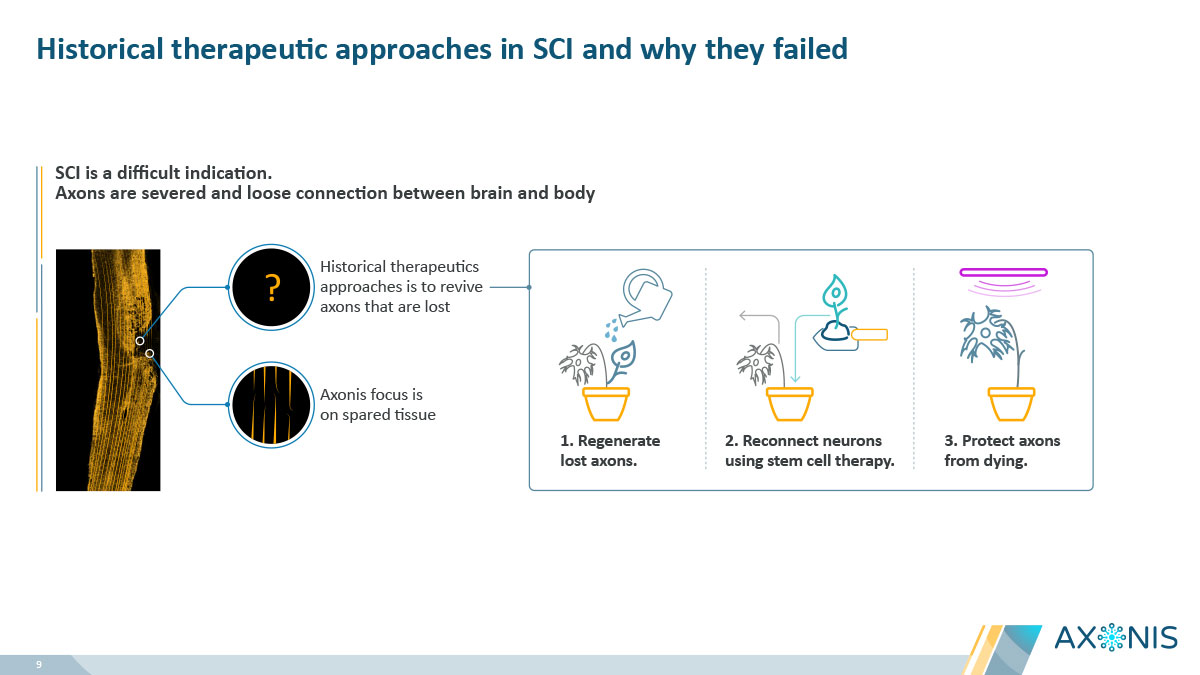
This slide discusses historical therapeutic approaches in Spinal Cord Injury (SCI) that focused on reviving lost axons and why they have faced challenges. It contrasts this with Axonis's focus on spared tissue, illustrating potential strategies like regenerating lost axons, reconnecting neurons using stem cell therapy, and protecting axons from dying.
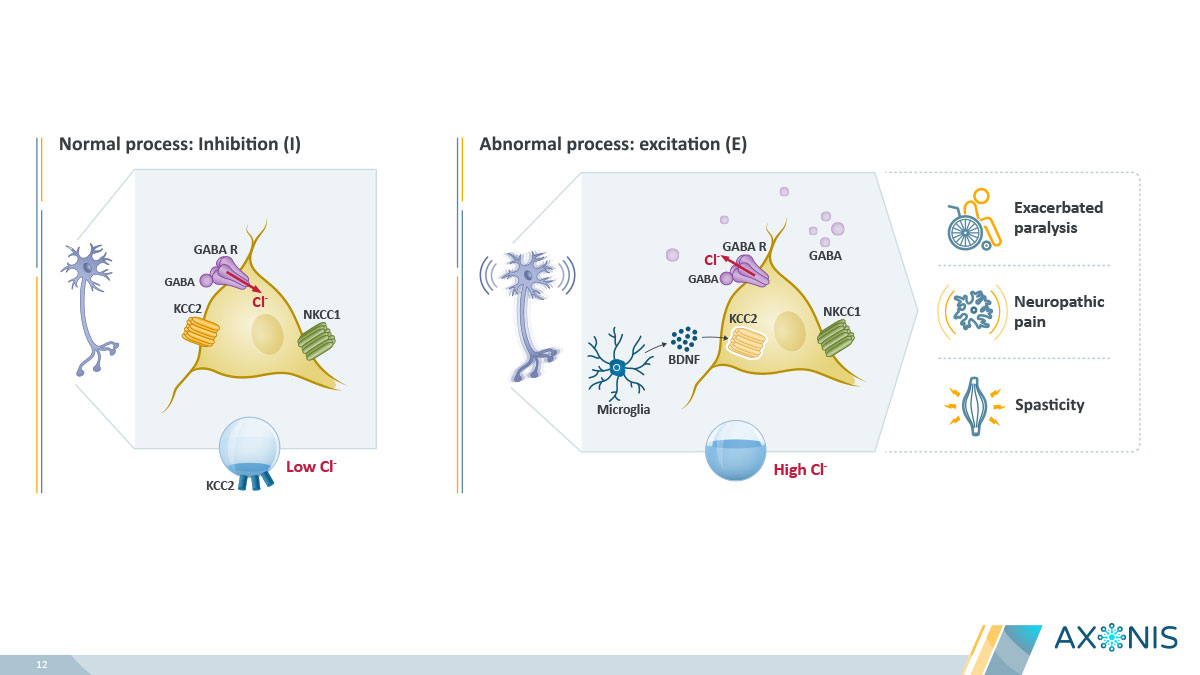
This slide illustrates the difference between normal inhibitory processes in neurons and abnormal excitatory processes that can occur after Spinal Cord Injury (SCI). It depicts the role of GABA receptors, chloride ions (Cl-), and transporters like KCC2 and NKCC1 in these processes, linking abnormal excitation to conditions like exacerbated paralysis, neuropathic pain, and spasticity.