Opna BIO

Opna Bio was formed by an accomplished team of biotech executives around a groundbreaking new discovery – the novel oncology target fragile X mental retardation protein (FMRP). FMRP research was led by one of Opna’s co-founders, a renowned scientist and co-author of the pioneering “Hallmarks of Cancer” series.

Referred to us by Longitude Capital, the Opna Bio team needed an corporate presentation and a website to launch the company in time for the release of the FMRP publication in Science magazine. They wanted our help in developing a corporate story that would cohesively combine their novel scientific discovery with the existing pipeline of oncology programs. 

As a result, the story we developed revolves around the Hallmarks of Cancer and ties together the novel and known cancer targets reflected in Opna’s pipeline. We developed their corporate presentation and website, designed multiple scientific illustrations, and led the re-branding effort for Opna Bio’s company and new scientific discovery launch.

To learn more about this project and working with us, please see our Opna Bio case study.

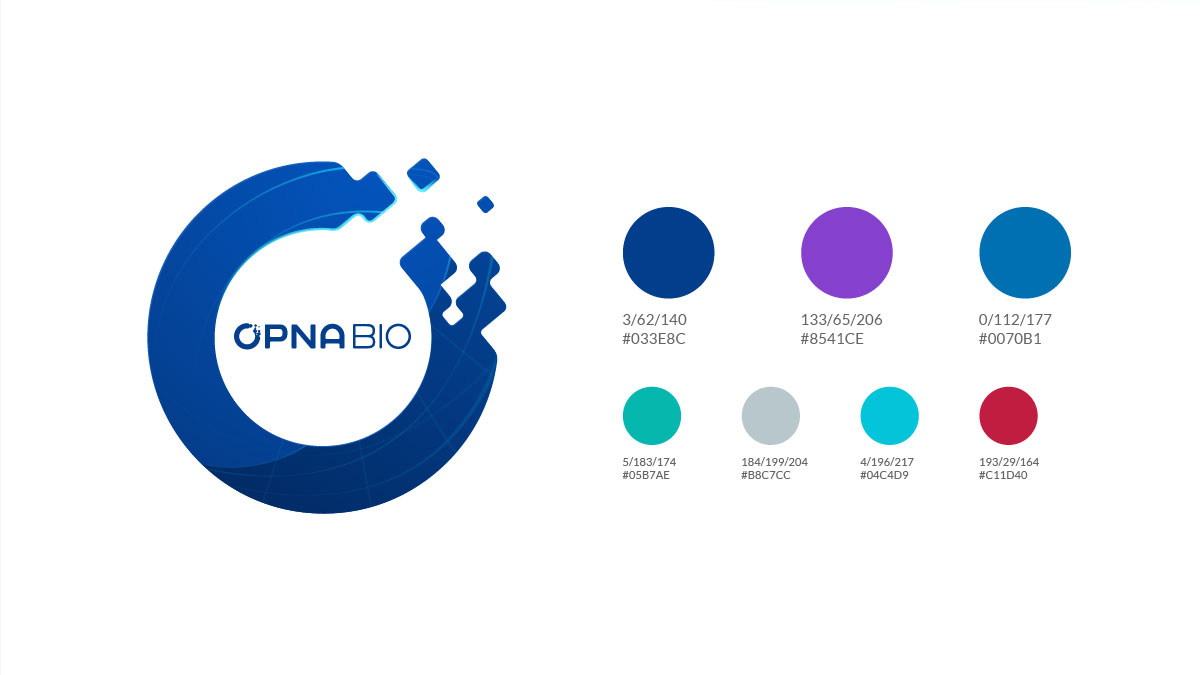
The Opna Bio logo, featuring a stylized blue circular design with a fragmented element, alongside the company name. The slide also displays Opna Bio's color palette with corresponding RGB and hex codes. This defines the visual brand identity of the oncology-focused biotech company.
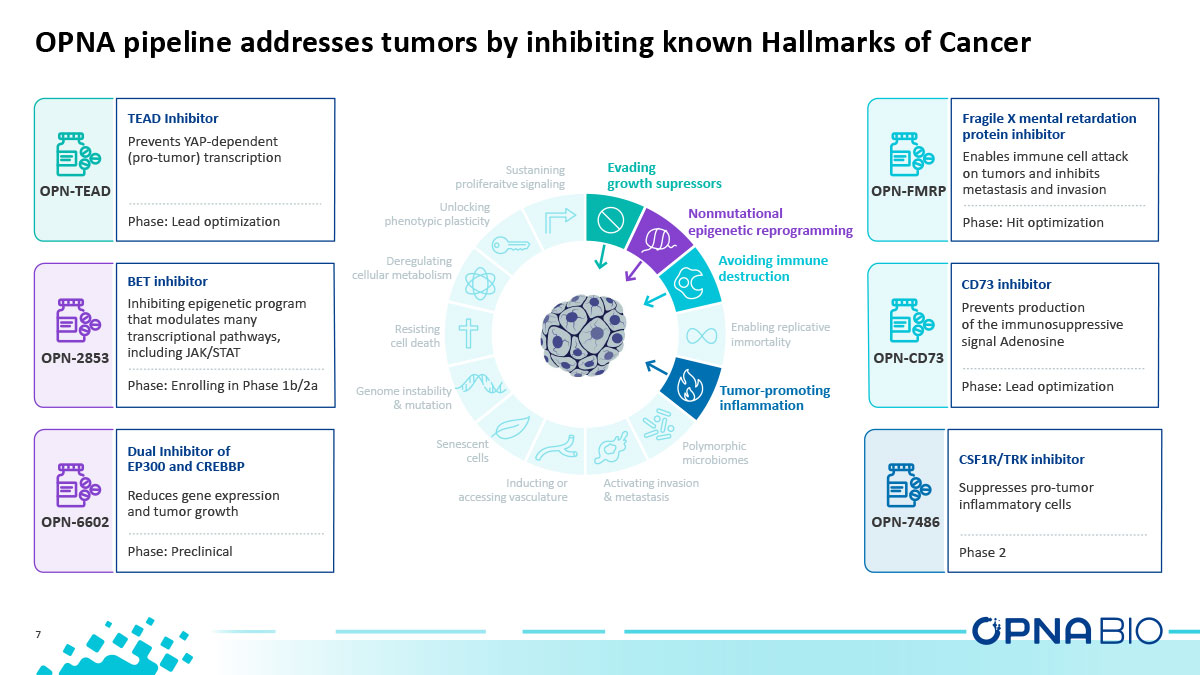
This slide from Opna Bio's investor deck illustrates their drug development pipeline and how their various programs (like OPN-TEAD, OPN-2853, OPN-6602, OPN-CD73, OPN-FMRP, OPN-7486) target known hallmarks of cancer, such as evading growth suppressors and avoiding immune destruction. Notably, OPN-FMRP is highlighted as a Fragile X mental retardation protein inhibitor.
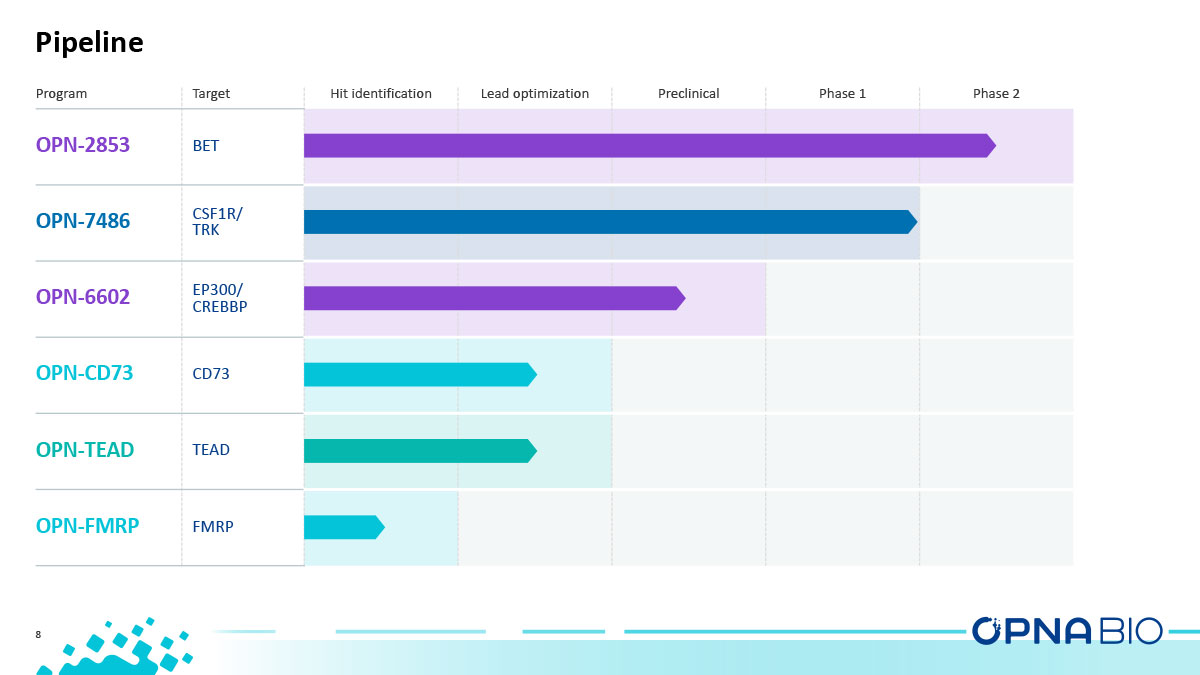
A visual representation of Opna Bio's drug development pipeline, showing the different programs (OPN-2853, OPN-7486, OPN-6602, OPN-CD73, OPN-TEAD, OPN-FMRP) and their current stage of development (Hit identification, Lead optimization, Preclinical, Phase 1, Phase 2). This provides a clear overview of their progress in oncology.
This slide focuses on Opna Bio's OPN-2853, a BET (Bromo and extra-terminal domain) inhibitor. It includes an illustration of a drug bottle and pills, alongside the mechanism targeting 'Nonmutational epigenetic reprogramming,' one of the hallmarks of cancer.
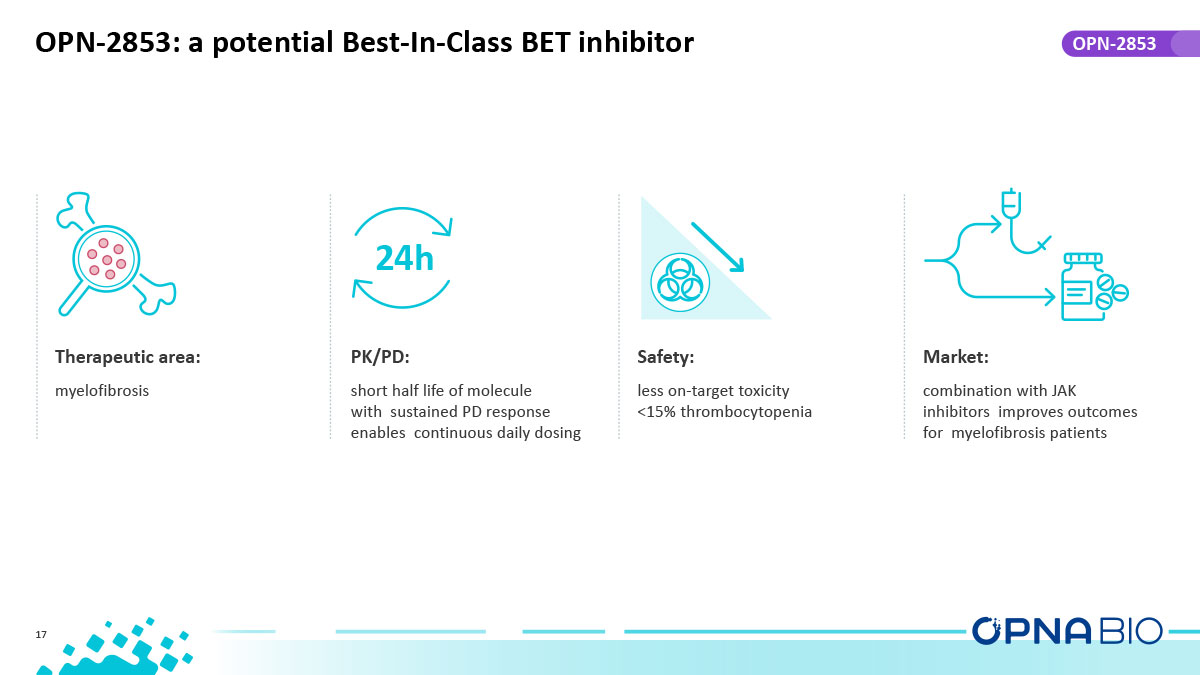
A slide highlighting OPN-2853 as a potential best-in-class BET inhibitor for myelofibrosis. It outlines the therapeutic area, PK/PD, safety profile, and potential market, emphasizing its differentiated characteristics in oncology.
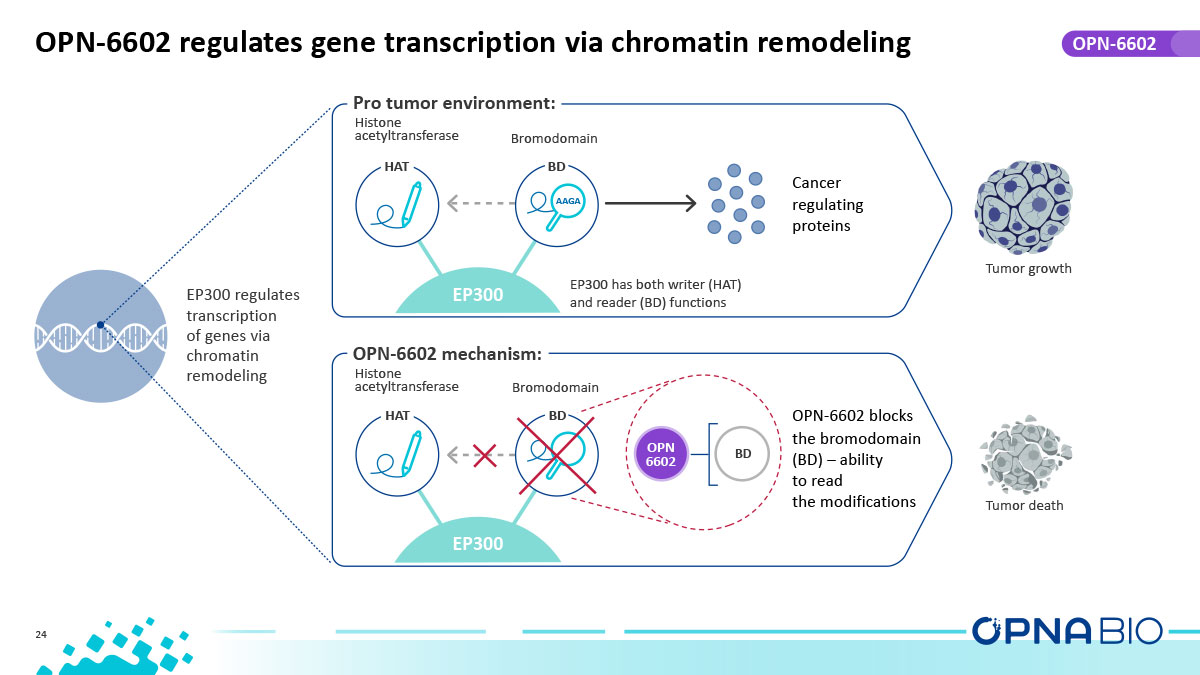
This slide explains how Opna Bio's OPN-6602 regulates gene transcription via chromatin remodeling, impacting the pro-tumor environment and leading to tumor death by blocking the bromodomain (BD) ability to read modifications.
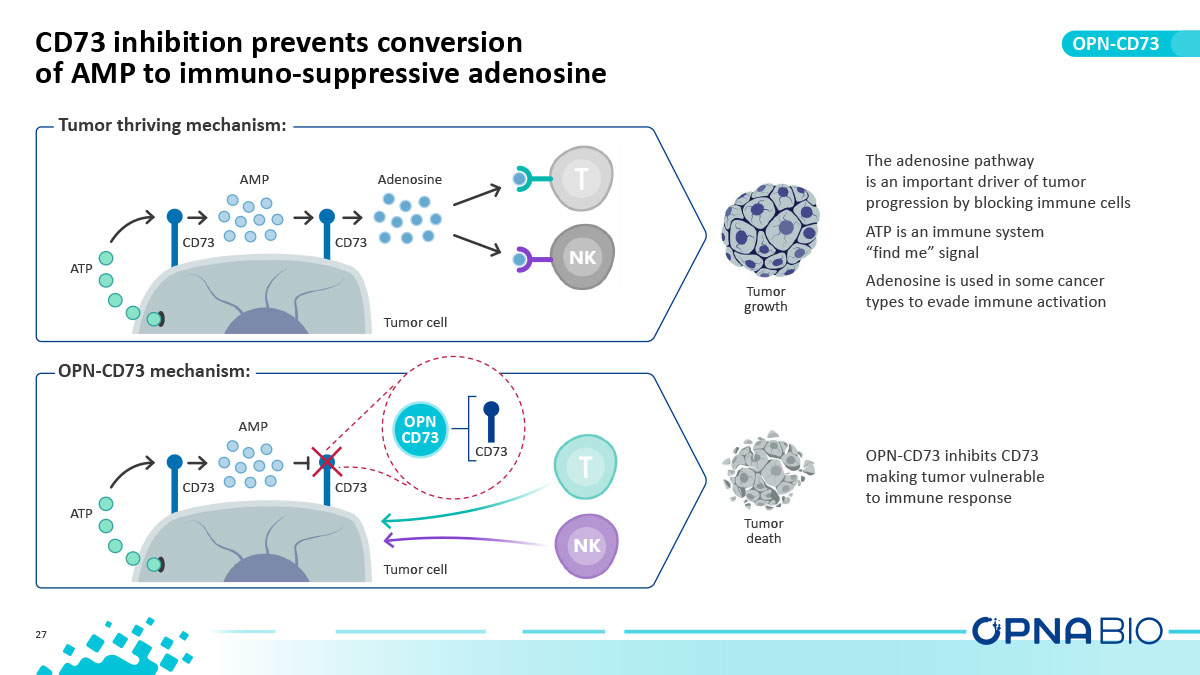
This slide details the mechanism of OPN-CD73, showing how its inhibition prevents the conversion of AMP to immunosuppressive adenosine, thereby making the tumor vulnerable to the immune response.
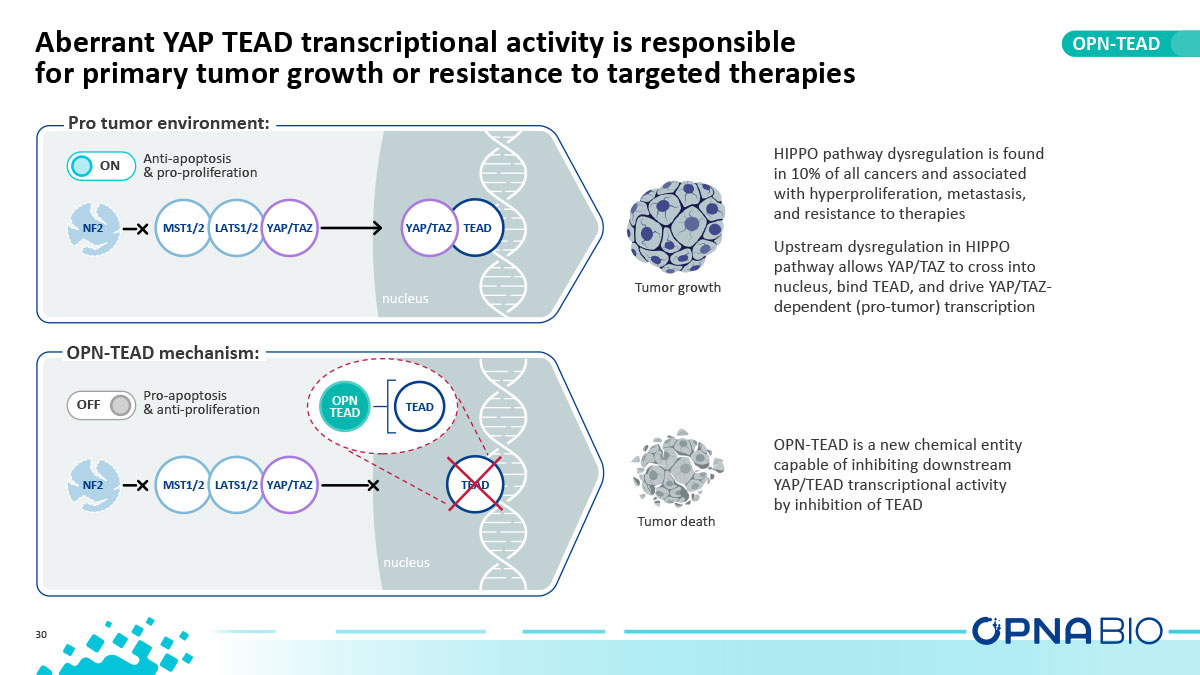
This slide explains that aberrant YAP TEAD transcriptional activity contributes to tumor growth and resistance to therapies, and how Opna Bio's OPN-TEAD aims to inhibit this pathway, leading to tumor death.
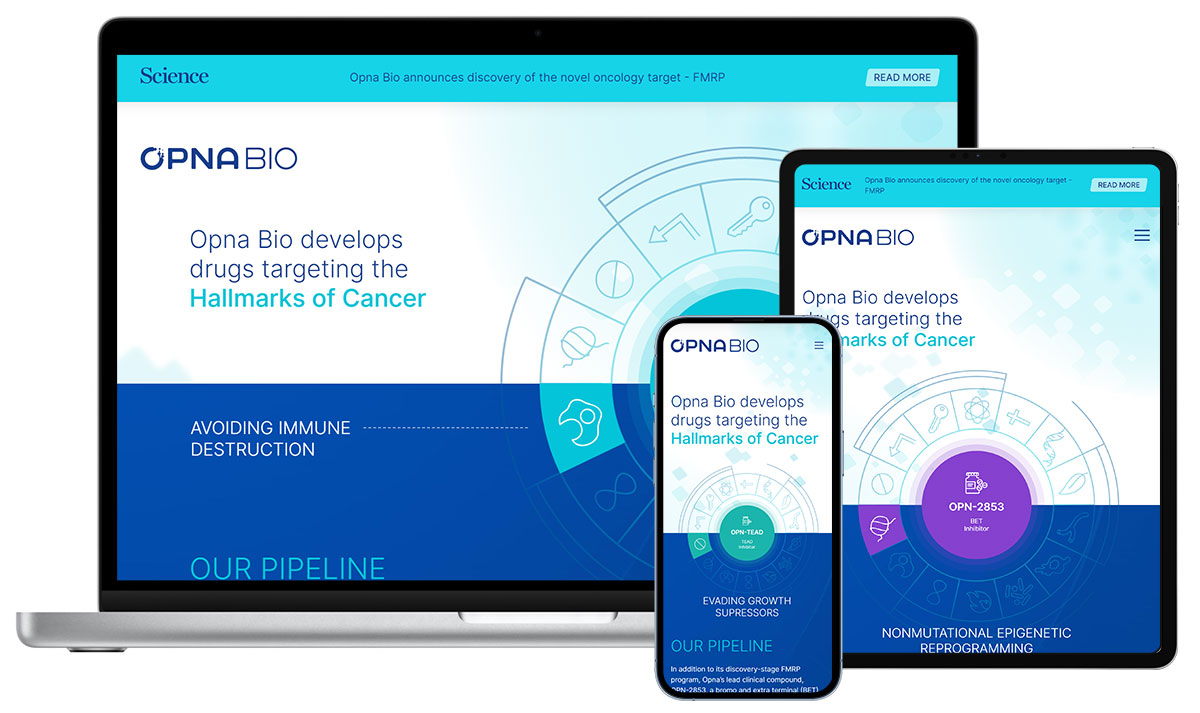
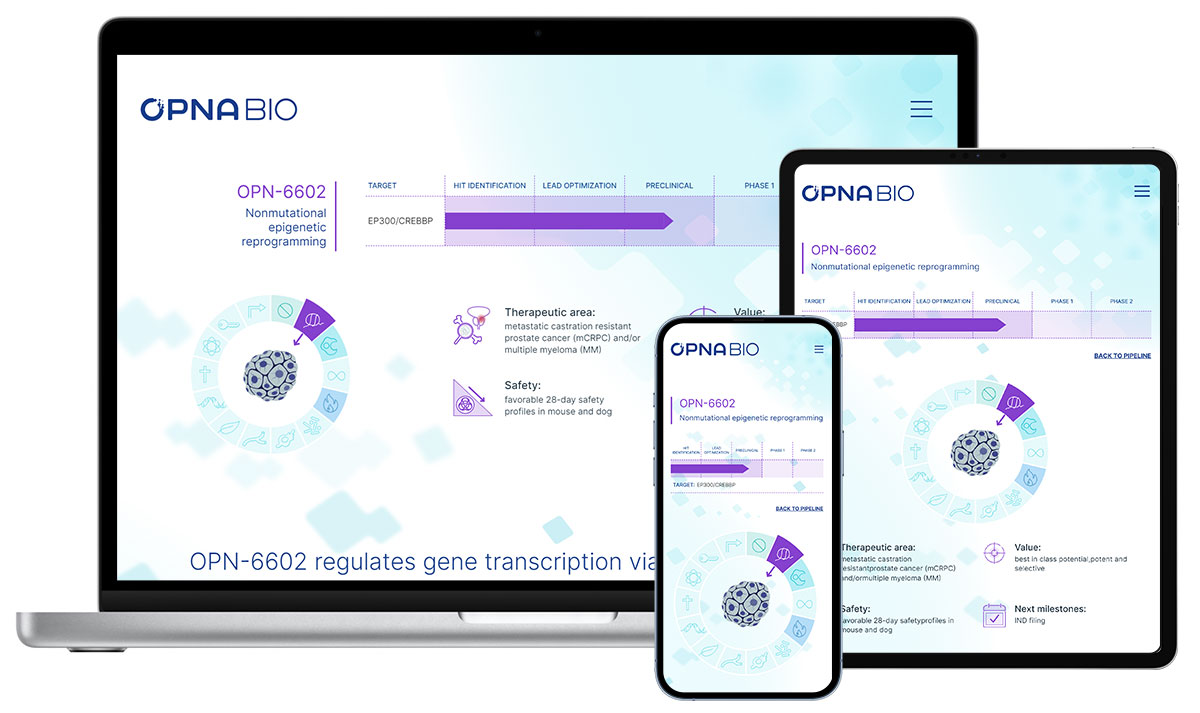
Responsive website design for Opna Bio, showcasing how their online platform adapts to different screen sizes (desktop, tablet, mobile). The design highlights their focus on developing drugs targeting the Hallmarks of Cancer.
This image shows how information about Opna Bio's OPN-6602 program, targeting nonmutational epigenetic reprogramming, is presented on their responsive website across different devices.