ALX Oncology IPO deck

ALX Oncology is a publicly traded clinical-stage immuno-oncology company developing therapies that block the CD47 checkpoint pathway.

Referred to us by investors, ALX was preparing for their IPO and needed guidance on building a story to differentiate them from their competitor, a public company recently acquired by big pharma. ALX’s existing deck used data comparison to call out their product’s superiority but overlooked the main message of how their therapeutic approach was unique.

To better understand the CD47 field, we conducted research and interviews with the management and science teams and discovered ALX’s approach was developed on different initial research than that of their competitor. Using this insight, we chose to build the investor story around the evolution of CD47 research and highlight where ALX Oncology fits into the overall space. This allowed us to elevate their novel work and make it distinct from the competition.

“That was very different, and that is how we now introduce our story. It is very effective… investors really compliment us on the deck, the way we tell the story.” – Nathan Caffo, ALX Chief Business Officer

To learn more about this project, read our ALX Oncology case study here.

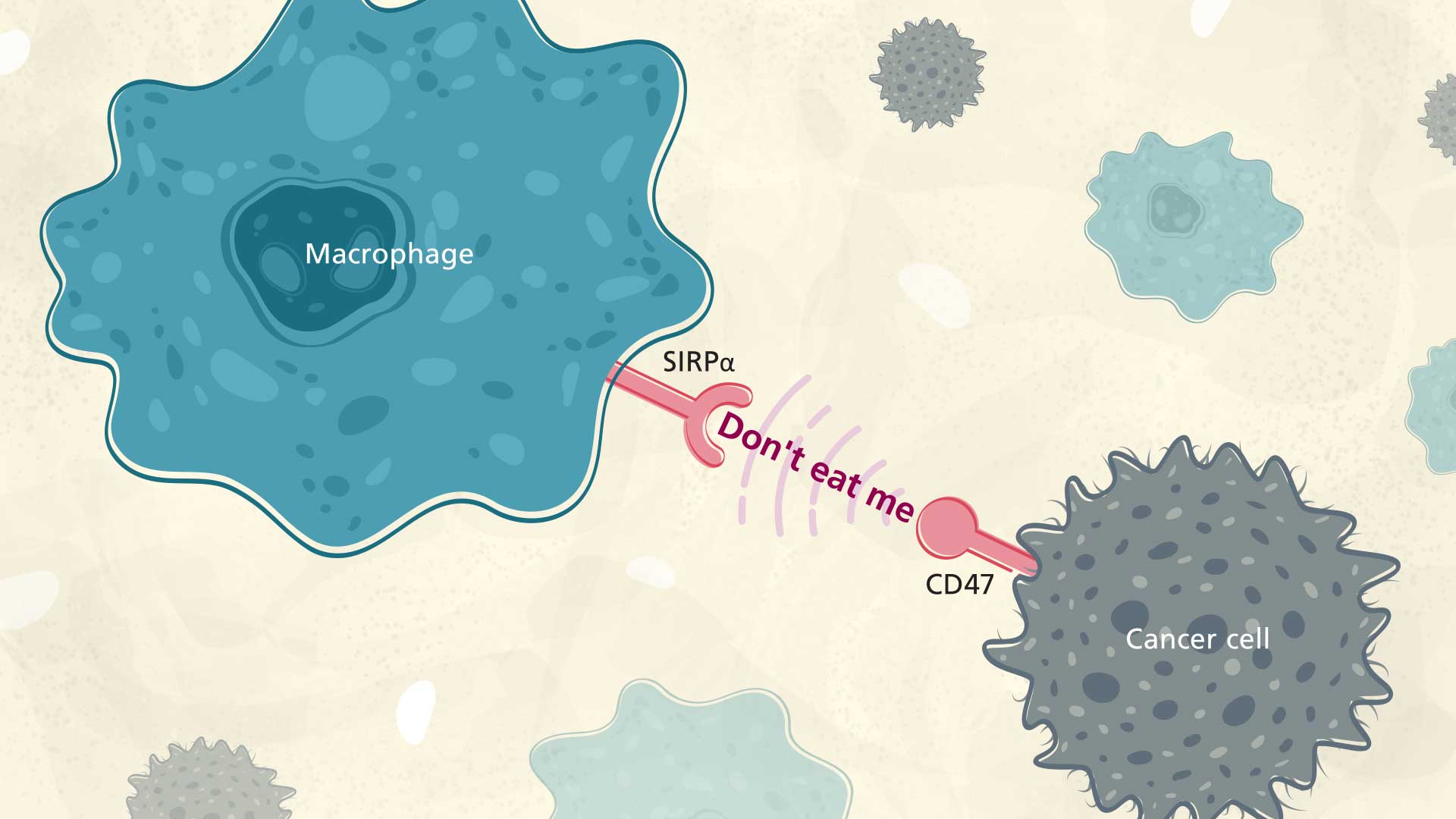
This close-up illustration depicts the basal state interaction between a macrophage and a cancer cell. The cancer cell expresses CD47, which binds to SIRPα on the macrophage, sending a 'don't eat me' signal and inhibiting phagocytosis.2 This illustrates the checkpoint that ALX Oncology aims to block.
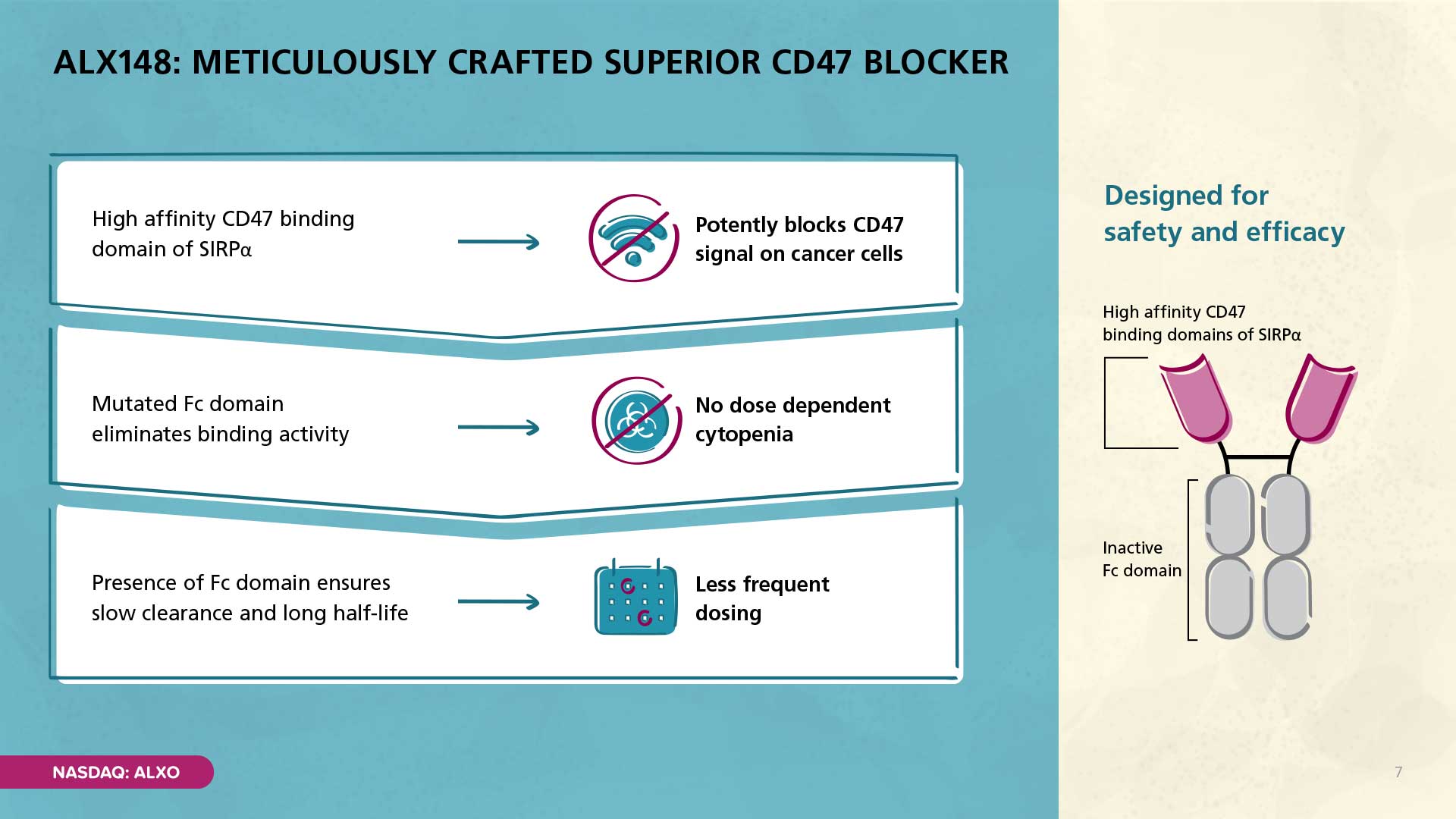
This slide highlights the key features of ALX148 as a superior CD47 blocker. It emphasizes its high affinity CD47 binding domain of SIRPα, its mutated Fc domain that eliminates binding activity to avoid dose-dependent cytopenia, and the presence of the Fc domain ensuring slow clearance and long half-life for less frequent dosing. A diagram illustrates the ALX148 antibody structure with an inactive Fc domain.
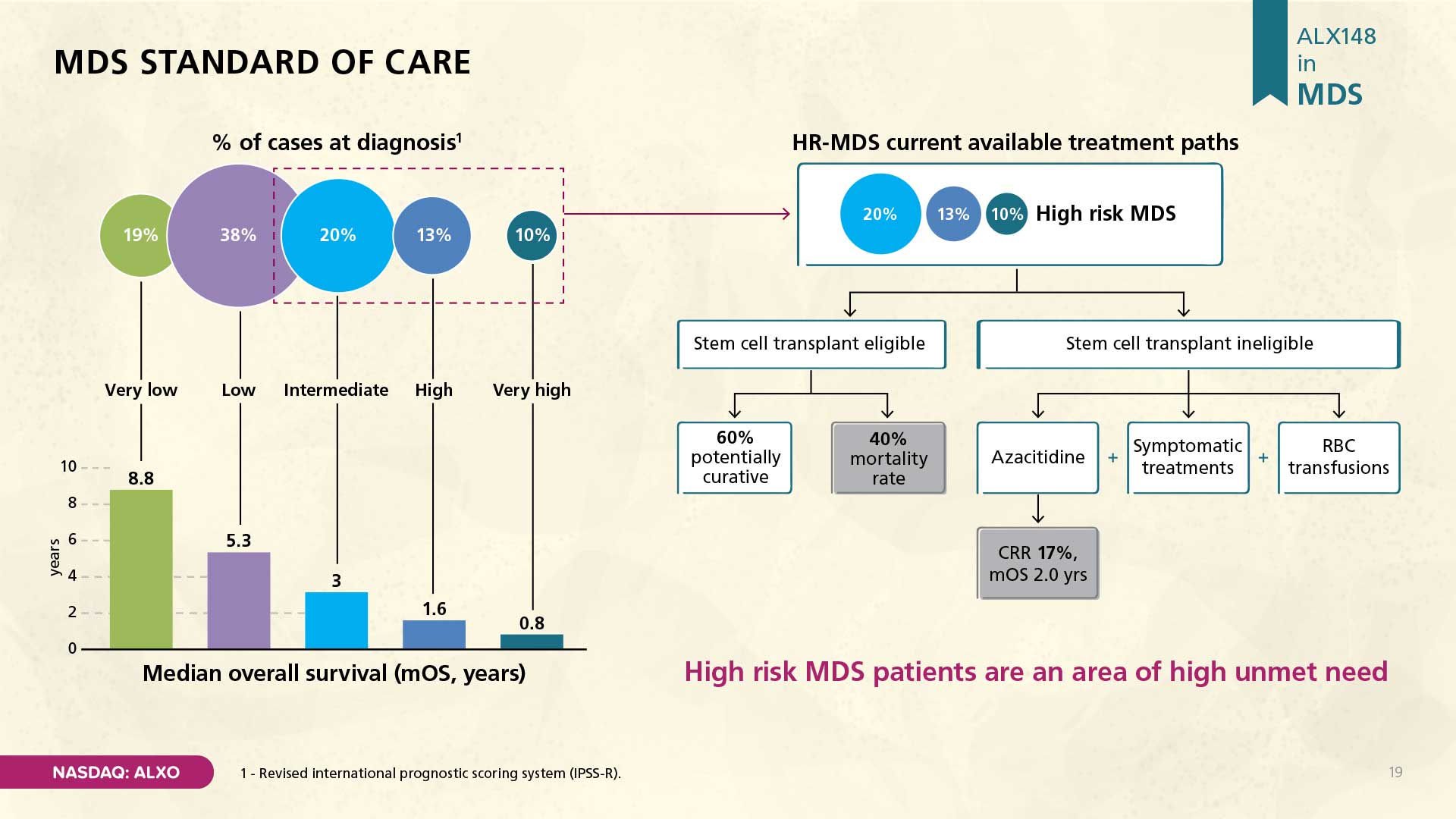
his slide focuses on ALX148's potential in Myelodysplastic Syndromes (MDS). It shows the distribution of MDS cases at diagnosis based on risk stratification and the current available treatment paths for high-risk MDS patients, highlighting the unmet need in this area that ALX148 aims to address.
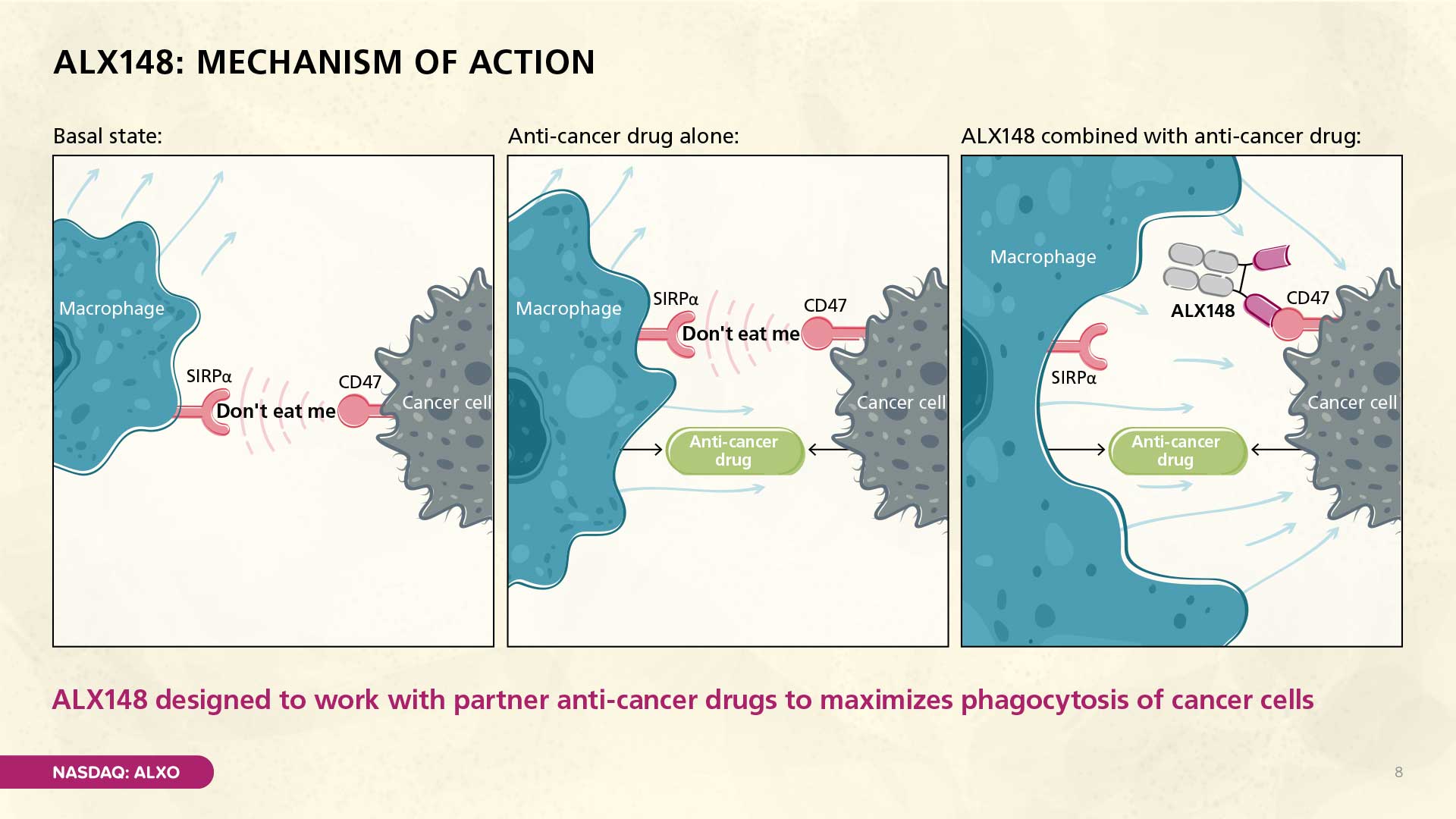
This series of illustrations explains ALX148's mechanism of action. It shows the basal state where CD47 on a cancer cell signals 'don't eat me' to a macrophage via SIRPα. Then, it depicts an anti-cancer drug alone. Finally, it shows how ALX148 combined with an anti-cancer drug blocks the CD47 signal, allowing the macrophage to phagocytose the cancer cell.
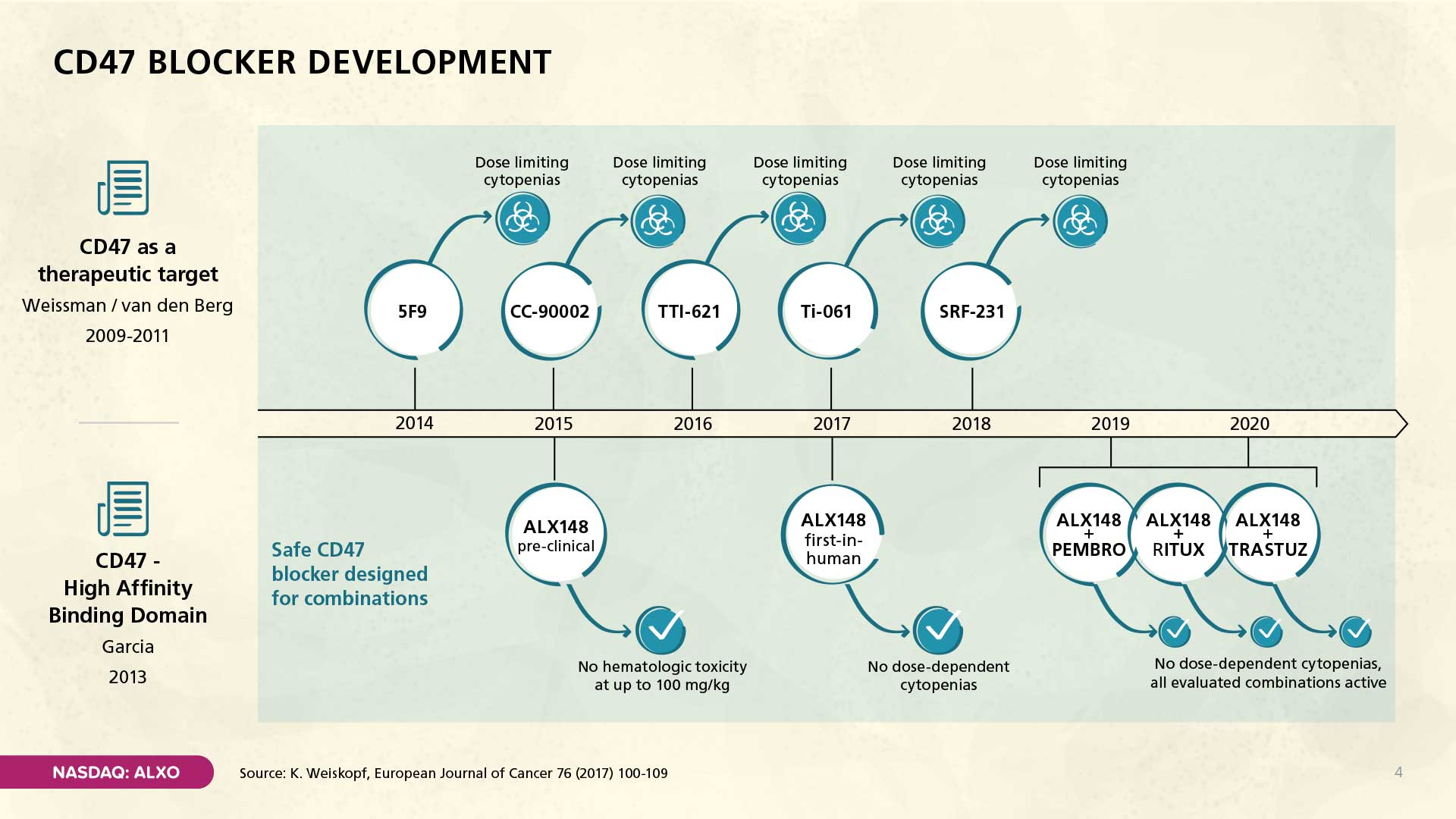
This slide presents a timeline of CD47 blocker development, highlighting various companies and their approaches, including dose-limiting cytopenias observed with some. It positions ALX148 as a safe CD47 blocker designed for combinations, showing its progression through preclinical and first-in-human studies with no hematologic toxicity at tested levels and no dose-dependent cytopenias, even in combination with other anti-cancer agents.1