TriSalus Life Sciences

TriSalus Life Sciences is a privately held immuno-oncology company that develops immunotherapy treatments and delivers it to liver and pancreatic tumors using proprietary drug delivery technology.

The company was known for its medical device, PEDD. But they’ve recently expanded their portfolio to therapeutics and needed help building a new story and a new corporate presentation

We worked closely with the executive team, learning about challenges they have in communicating with potential partners and investors. We structured the obtained information into a logical narrative, developed scientific illustrations, a new presentation style, and built a set of slides for a new corporate presentation.

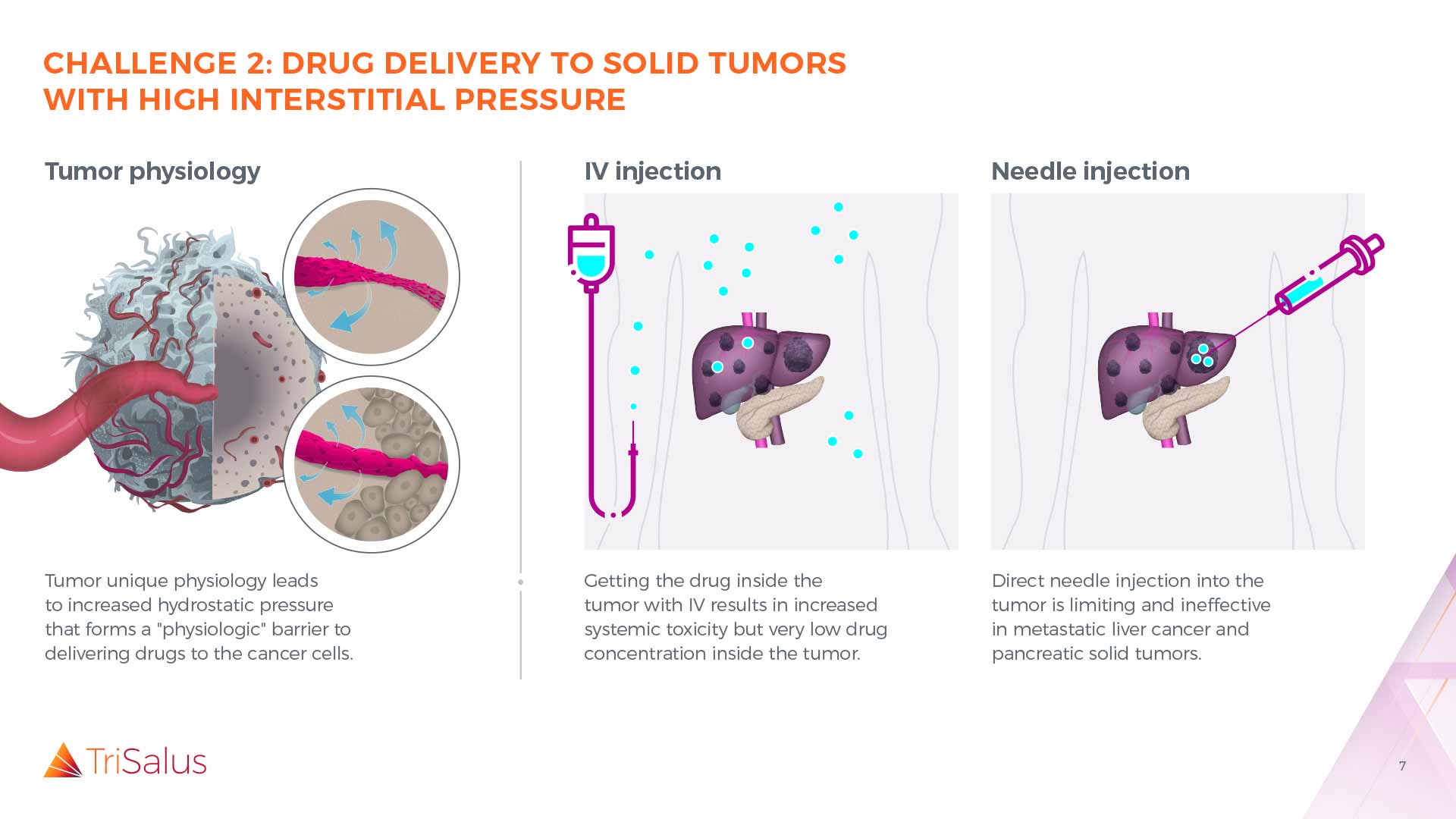
This slide from TriSalus highlights the challenge of delivering immunotherapy to solid tumors in the liver and pancreas due to high interstitial pressure within the tumor microenvironment. It compares IV and needle injection approaches, illustrating how tumor physiology acts as a physical barrier to drug penetration. The visual emphasizes that IV administration results in systemic exposure with minimal drug reaching the tumor, while direct injection remains ineffective for metastatic liver and pancreatic cancers.
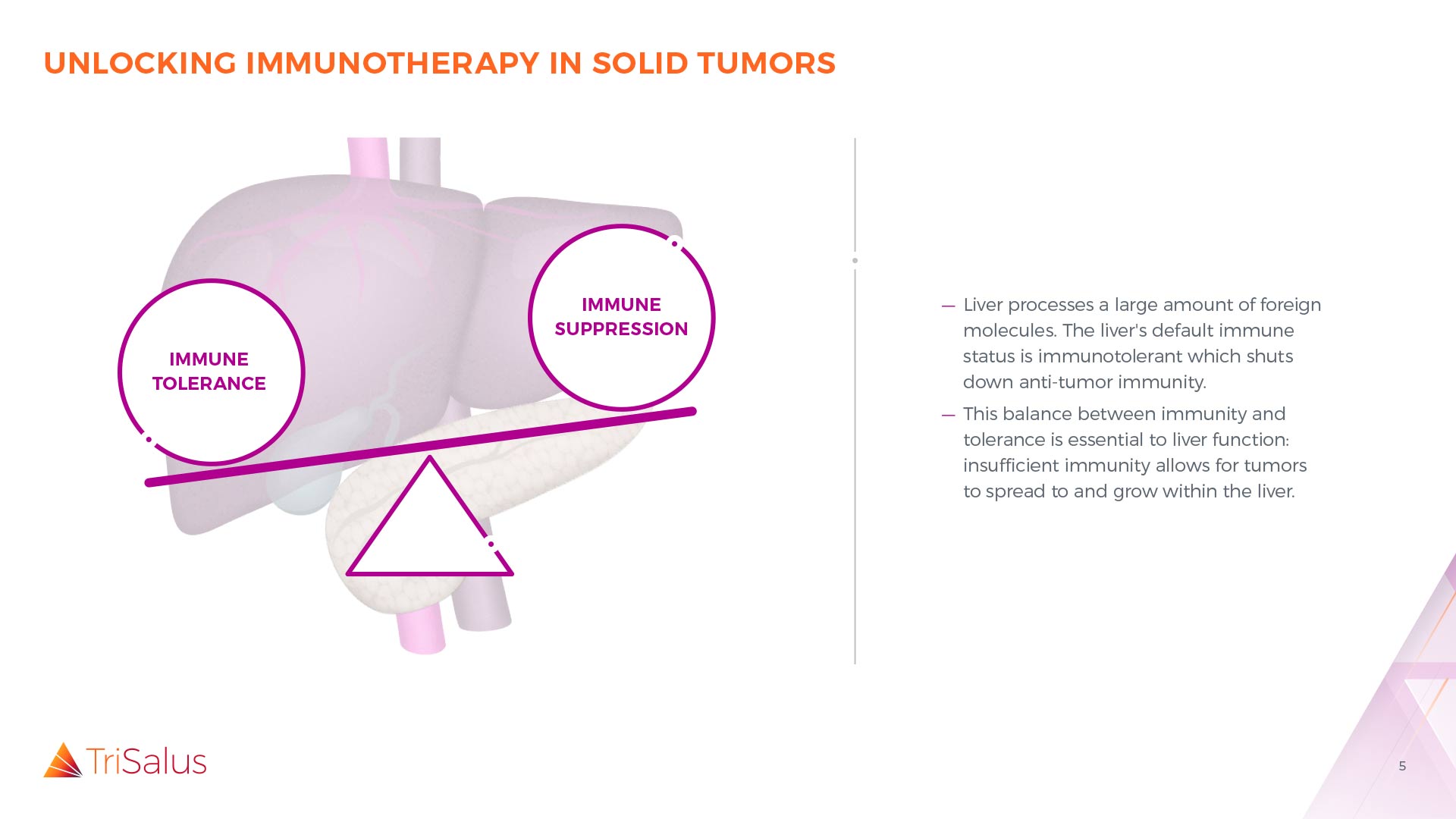
This slide illustrates the balance between immune tolerance and immune suppression in the liver and pancreas, explaining how the liver's natural tolerogenic environment can allow tumors to grow. This sets the stage for how Trisalus aims to unlock immunotherapy in these 'cold' solid tumors.
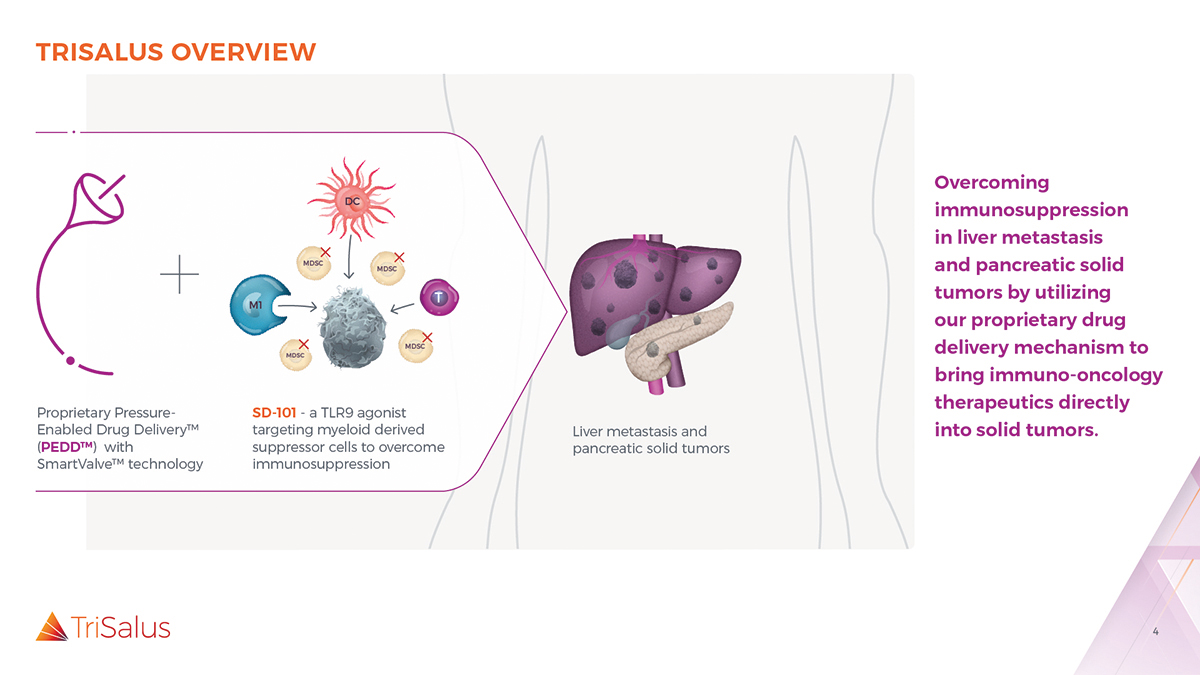
This slide provides an overview of Trisalus's approach to overcoming immunosuppression in liver metastasis and pancreatic solid tumors. It highlights their proprietary Pressure-Enabled Drug Delivery™ (PEDD™) with SmartValve™ technology, used to deliver their TLR9 agonist SD-101 directly to tumors, targeting myeloid-derived suppressor cells.
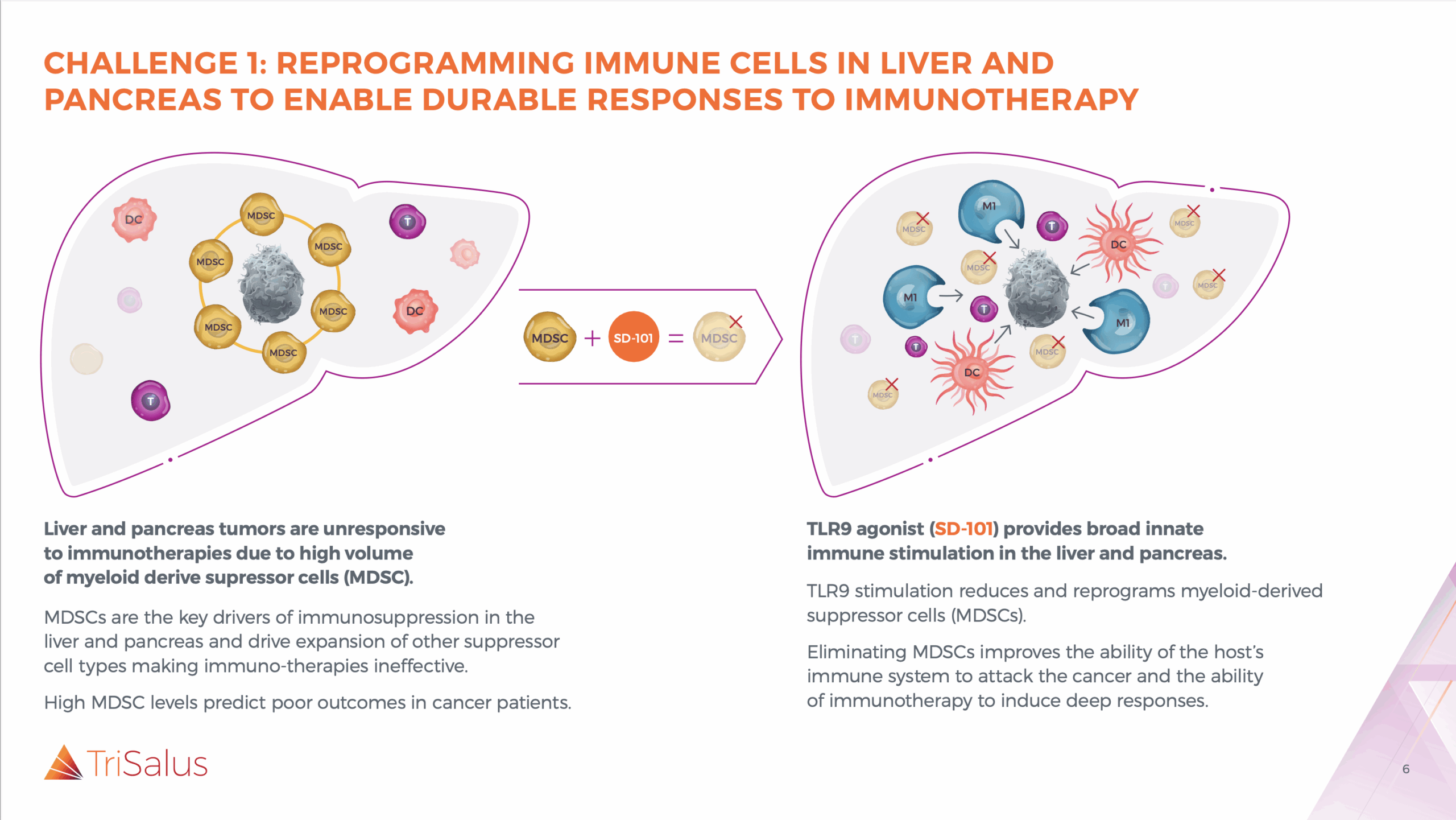
This slide from Trisalus outlines the challenge of reprogramming immune cells in liver and pancreas tumors to enable durable responses to immunotherapy. It illustrates how myeloid-derived suppressor cells (MDSCs) contribute to an immunosuppressive environment, and how their TLR9 agonist (SD-101) aims to overcome this by promoting innate immune stimulation and reducing MDSCs.
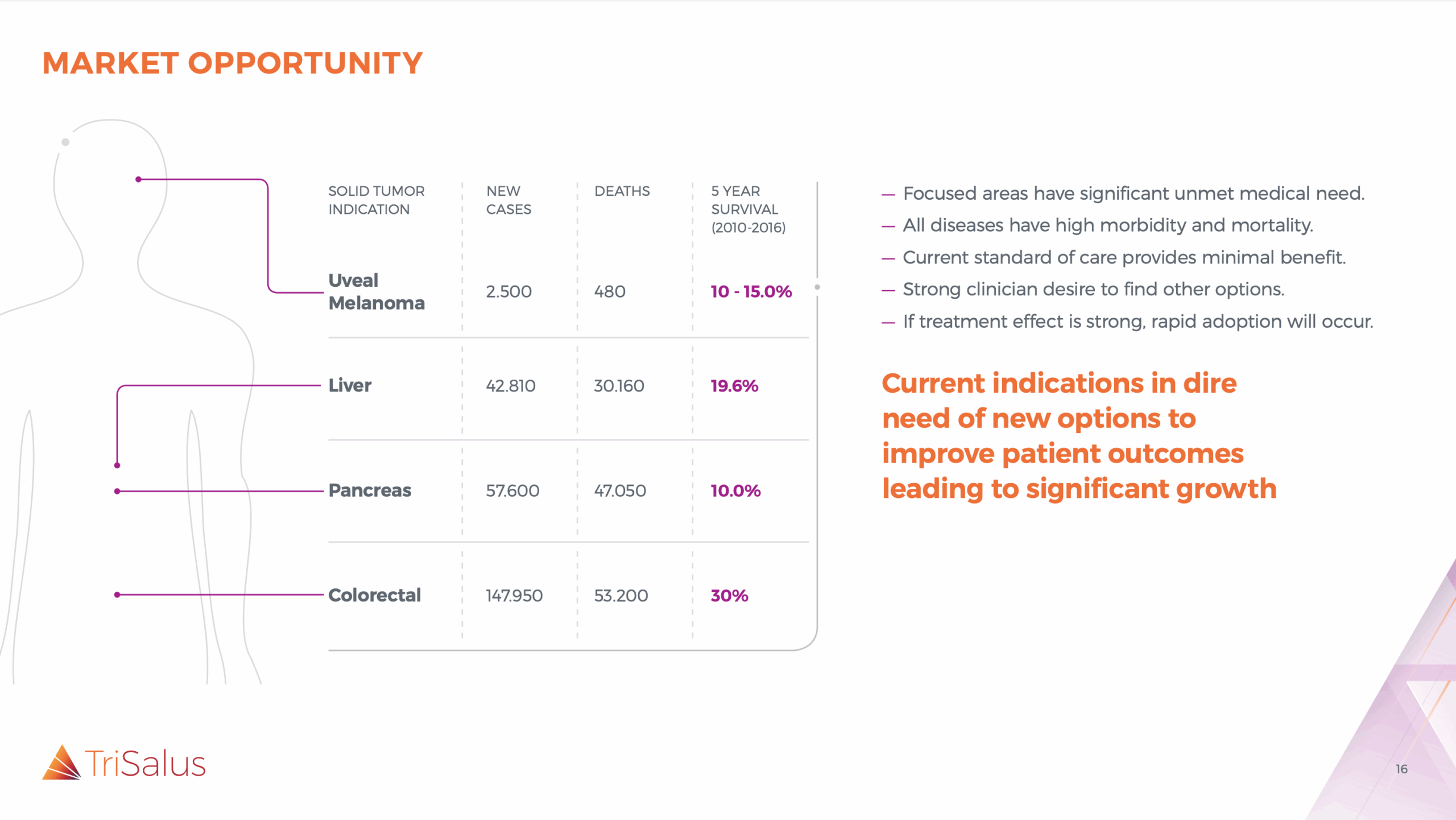
This slide details the market opportunity for Trisalus, highlighting the dire need for new options in solid tumors like uveal melanoma, liver, pancreas, and colorectal cancers. It presents data on new cases, deaths, and 5-year survival rates, emphasizing the significant unmet medical need and potential for growth.